
Category: Money Tools

  • Where Did My Money Go? Why You Need a Budget in Your 20s

    Where Did My Money Go? Why You Need a Budget in Your 20s

    Be honest, have you ever opened your bank app and thought, “Wait… where did all my money go?”

    It happens to the best of us. But here’s the truth: when you wing it with your money, you accidentally give your dollars permission to disappear. Winging it almost always leads to overspending, often without you even realizing it.

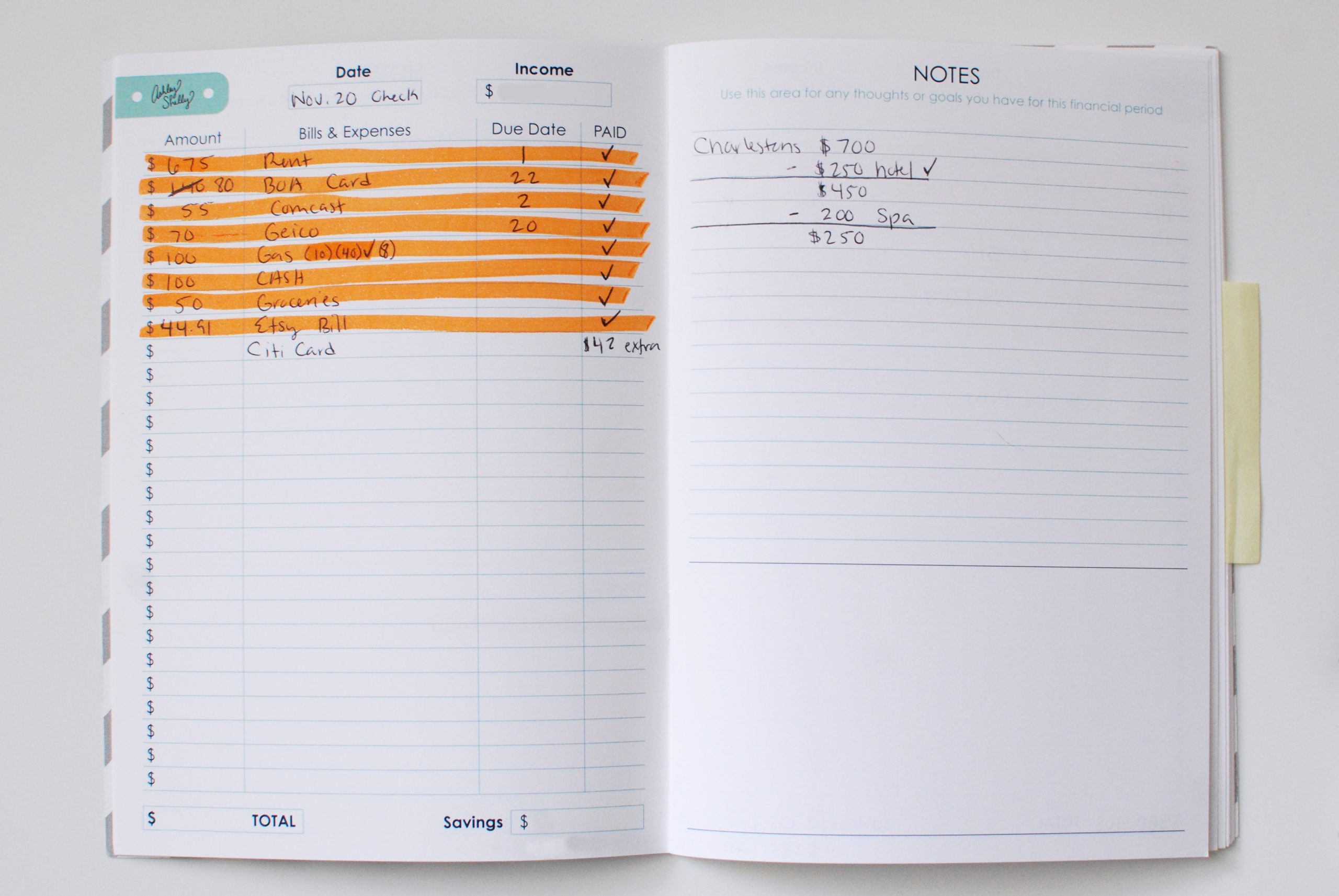
    Budgeting may sound about as exciting as studying for a Chem exam, but it’s one of the most important and practical steps you can take with your money. And the best part? You have the power to make it happen.

    A budget is a powerful tool that helps you gain control over your finances. When you have a plan, every dollar has a purpose, and that purpose moves you closer to your goals instead of further away.

    Budgeting allows you to clearly see how much money you need to invest, pay your bills, and even set aside for fun. Teens might be able to slide by without budgeting, but if you’re in your 20s, one of the real secrets to long-term financial confidence and success is building the discipline of creating a budget and sticking to it.

    A budget doesn’t restrict you. It gives you freedom. Freedom to spend intentionally. Freedom to save strategically. Freedom to feel peace about your financial future.

    Proverbs 21:5 says, “The plans of the diligent lead to profit as surely as haste leads to poverty.” In other words, when you make a plan for your money and follow through with discipline, you’re far more likely to see positive results. But if you wing it and hope for the best, you may end up holding your breath the next time you swipe your card at Walmart.

    Side note: If you want a masterclass in wisdom, try reading one chapter of Proverbs each day. The financial insight is pure gold!

    Let me help you get started with a simple, faith-based money plan that works for your life, not against it (and no, it doesn’t require giving up your iced coffee)!

    Watch this video to learn how to stop winging it and start feeling confident with your money:
    [How to Stop Winging It With Your Money]

    To access the moveHER Money Budget Sheet used in the video, click here.

    You can’t control every part of life, but you can choose to plan your money with purpose. And when you do, peace follows.


  • Fresh Starts

    Fresh Starts

    Today marks the first day of spring. And if you’re anything like me, that’s worth celebrating.

    I am not a cold-weather person. Winter has its charm for about… ten minutes. After that, I’m counting the days until the sun feels warm again and the world wakes up.

    One of my favorite moments each year is seeing the first daffodils push through the soil. After months of frozen ground and gray skies, those little yellow blooms feel like a quiet announcement: hope is back. Soon the birds start singing again, the trees begin to blossom, and the grass slowly turns green. Everywhere you look, life is starting over.

    Spring has a way of reminding us that new beginnings are always possible.

    The Bible captures this beautifully in Isaiah 43:19:

    “See, I am doing a new thing! Now it springs up; do you not perceive it?”

    Just like the earth gets a fresh start each spring, this season is a perfect time to give your finances a fresh start too.

    Think of it as spring cleaning for your financial life.

    Maybe over the winter a few spending habits crept in that you’d like to change. Maybe you’ve been meaning to start a budget but haven’t quite taken the first step yet. Or maybe you just want to feel more in control of your money instead of wondering where it all went at the end of the month.

    Spring is a great time to brush the dust off your finances.

    Take a fresh look at your spending. Rework your budget or start one for the first time. Small changes made now can grow into something strong and steady over time, just like those first daffodils in the garden.

    If you’re not sure where to begin, access the Money Budget Sheet from moveHer Money: click here.

    (The link will direct you to make a personal copy of the Budget Sheet for yourself. Just click “make copy” and you’ll have a private version of the moveHER Money Budget Sheet!)

    After all, new seasons are made for new beginnings. Your finances can bloom too. 🌱

  • A Story Still Growing

    A Story Still Growing

    It’s easy to think of generosity as something we’ll grow into later. When I have more money. When life feels more stable. When I’m finally ahead. But Scripture shows us something deeper: generosity is less about timing and amount, and more about trust. God has always worked through small, faithful acts offered at just the right moment.

    All throughout the Bible, God uses seeds. Small beginnings. Ordinary offerings. A mustard seed. A widow’s two copper coins. A simple gift placed into His hands. Again and again, God shows that what seems small to us can become something lasting and life-giving in His care.

    That truth is beautifully reflected on our campus during Seeds of Generosity, a month-long celebration of how God works through the faithful giving of His people to sustain Christ-centered education at Concordia University, Nebraska.

    For many students here today, the opportunity to learn, grow, and prepare for future vocations is made possible because someone else planted a seed years ago. Donors gave scholarship gifts long before they knew the names, faces, or stories of the students those gifts would one day support. They trusted God to do the growing.

    That is the quiet beauty of generosity. A seed planted in faith doesn’t always bloom right away. Sometimes it grows in ways the giver never gets to see. And yet, the fruit is real. It shows up in classrooms, chapel services, late-night study sessions, friendships, and callings taking shape.

    Jesus highlights this heart of giving in Luke 21:3–4 when He points to the widow who gave just two small coins. Her gift mattered not because of its size, but because it was given in faith. God sees generosity differently than we do.

    We are reminded through Seeds of Generosity that none of us needs to be impressive or abundant to play a role in God’s work. We are simply seeds ourselves. And that is enough. God is the one who tends the field, nurtures the growth, and brings the harvest in His time.

    As we reflect this month, we give thanks for the faithful donors whose generosity continues to shape lives today. Their gifts are still growing. Their seeds are still bearing fruit. And their trust in God’s provision continues to bless this campus in ways both seen and unseen.

    That is the power of generosity in God’s hands.

  • How to Know if You’re Making the Wrong Financial Decision

    How to Know if You’re Making the Wrong Financial Decision

    We’ve all made money mistakes, and I’m definitely no exception.

    Let me share one of mine from my twenties, back when I was living in New York City and still figuring out adulthood, relationships, and money in real time.

    At the time, I was dating someone who was struggling financially. He was behind on bills and eventually asked me to loan him thousands of dollars to help him get back on his feet. When he first asked, I hesitated. Something in my gut told me to slow down and think it through.

    But instead of listening to that feeling, guilt took over. I didn’t want to seem unsupportive. I didn’t want to be “that girl.” And eventually, I said yes.

    Here’s the part that matters most:
    I didn’t tell anyone about the decision.

    Not my friends.
    Not my family.
    Not even my parents.

    Why? Because deep down, I knew it wasn’t a smart financial move, and I was embarrassed. I felt ashamed that I had ignored my better judgment, and I didn’t want anyone questioning my choice.

    A few weeks later, the weight of it all finally caught up to me. I called my dad and explained what had happened. He listened quietly, then said something I still remember to this day:

    “Sarah, why didn’t you talk to me before making this decision? I would have stopped you.”

    He was right. And, spoiler alert: I was never repaid.

    That experience taught me an expensive but invaluable lesson. One I wish I’d learned sooner.

    If you feel the need to hide a financial decision from the people you trust and respect most, that means you’re making the wrong choice.

    So let me ask you this:

    Is there anything financial happening in your life right now that you’re avoiding talking about?
    A credit card balance?
    A purchase you regret?
    A financial favor you agreed to out of pressure or guilt?

    Here’s the truth: everyone makes money mistakes, especially in their twenties. What matters most isn’t avoiding every mistake, it’s learning how to recognize them early and knowing when to ask for help.

    Talking openly with a trusted friend, family member, or mentor can help you gain perspective and prevent a small misstep from turning into a long-term setback.

    If you’re looking to be more proactive about your finances and avoid some of the most common money mistakes young adults make, I created a free resource called “8 Money Mistakes to Fix in Your Twenties.” It breaks down common financial missteps, like not asking for guidance, ignoring debt, or avoiding money conversations, and offers simple, practical steps you can take right now.

    You can download the free guide here:
    https://www.moveher.money/moneymistakes

    Consider this your nudge to take the next step…whether that’s starting a money conversation you’ve been avoiding or educating yourself so you can make more confident financial decisions moving forward.

    Pushing past embarrassment or shame could end up being one of the best financial decisions you make this year.

  • Why You Should Close Your Standard Savings Account

    Why You Should Close Your Standard Savings Account

    Ready to level up your savings game and make your money work harder for you? 🙋🏼‍♀️

    Let’s talk high-yield savings accounts (HYSA…gotta love acronyms!) and why you should close your standard savings account for one.

    What is a HYSA?

    Think of a high-yield savings account as the VIP section for your hard-earned cash. It’s like an accelerated savings option that offers you way more bang for your buck compared to your regular savings account.

    What are the interest rates of a HYSA?

    Here’s the scoop: While a typical savings account gives you a teensy-weensy interest rate (0.4% according to GoogleAI), a high-yield savings account cranks up the excitement by offering significantly higher interest rates (averaging around 4% according to GoogleAI).

    That means your money will make around 10x MORE in a HYSA than a standard savings account at a bank! Cha-ching! 💰

    Is a HYSA safe?

    With a HYSA, your money stays safe and sound (most are FDIC Insured), just like in a regular savings account. Plus, there are multiple that don’t have sneaky fees or minimum balance requirements. Win-win!

    Years ago, at our house, we closed all of our standard accounts at the bank and instead opened up a HYSA Account for each of the following categories:

    • Emergency Fund/Savings we plan to spend in the next 5 years.
    • Forecasted Taxes (the joys of being a business owner!)
    • Our son.
    • Our daughter.

    If there’s one EASY way to get your money set up so it can work harder for you, then close your standard savings accounts and open up a HYSA!

    What HYSA should you open?

    I’m glad you asked! To make your decision easier, I’ve created a simple guide called the HYSA Interest Rate Roundup.

    Here’s what you’ll get in the guide:

    • Comprehensive Interest Rate Comparison: We’ve researched and compiled the latest interest rates from 10 of the most popular HYSAs.
    • Easy-to-Read Format: Get all the information you need at a glance with our beautifully designed one-sheeter.
    • Expert Insights: Learn the benefits of HYSAs and how they can help you achieve your financial goals faster.

     So, are you ready to make the switch and ensure you’re maxing out the interest on your savings?

    Click here to get the HYSA Interest Rate Roundup!

  • Just Start: Finding Peace & Purpose in Your Money Journey

    Just Start: Finding Peace & Purpose in Your Money Journey

    If you’ve ever thought, “I really need to get my money together,” but didn’t know where to start—you’re not alone. Managing money can feel overwhelming. There are a million budgeting apps, videos, and plans all promising to be the way to financial peace. Some say use envelopes. Others say automate everything. Some say save $1,000 first, others say pay off debt fast. It’s enough to make you want to shut your laptop and order a coffee instead.

    But here’s the truth: you don’t need the perfect plan. You just need a plan—and you need to start.

    The “perfect” plan doesn’t exist

    The world loves to sell us formulas: perfect skin care routines, perfect workout plans, perfect ways to study. Money is no different. But just like faith, your financial journey is personal. The best plan is the one you’ll actually do—consistently.

    Think of it like this: you wouldn’t refuse to pray because you haven’t found the perfect devotion book. You just start talking to God. In the same way, you don’t have to have every spreadsheet figured out before you start managing your money. You just start paying attention.

    Start small, start now

    You don’t need a finance degree or a fancy app. You just need a few minutes and a willingness to take the first step. Maybe that’s writing down what you spend for one week. Maybe it’s checking your bank balance and saying, “Okay, I can do better.” Or maybe it’s sitting down and deciding what your next paycheck needs to cover before you spend it.

    The key is to move from thinking about it to doing something about it. Progress over perfection.

    Faith and finances

    As a student at Concordia, you have probably already heard that everything we have—our time, talents, and money—is a gift from God. Managing it well isn’t just about numbers. It’s about gratitude and stewardship.

    When you organize your money, you’re not just building savings—you’re building peace. You’re saying, “God, I trust You with what You’ve given me, and I want to use it wisely.” Money confidence isn’t about control. It’s about trust.

    Try one of these tools

    If you’re ready to start, here are three simple, free tools to help you see where your money is going and make a plan:

    1. EveryDollar.com – A super user-friendly budgeting app from Ramsey Solutions. It helps you create a monthly plan that tells every dollar where to go—no confusing charts, no pressure.
    2. Mint.com – Great if you want an automatic tracker. It links to your accounts and categorizes your spending for you.
    3. NerdWallet.com – Offers free calculators, budget templates, and tips for building financial confidence.

    You don’t need to commit to one forever—just pick one and start experimenting.

    Grace for the journey

    Remember: money management isn’t about perfection. It’s about progress, learning, and trusting God along the way. You’ll make mistakes (everyone does). You’ll overspend sometimes. You’ll forget to budget a line for coffee or textbook fees. That’s okay. Each step forward—each time you choose to pay attention instead of avoid—is a win.

    Give yourself grace. God’s already given it to you.

    Your next step

    This week, try one small thing:

    • Write down your last five purchases.
    • Download one of the tools above and set up your first budget.
    • Or simply pray, “Lord, help me honor You with what I have.”

    Money confidence doesn’t come from having everything figured out—it comes from starting, and from knowing you’re not alone. You’ve got faith, a community that cares, and the ability to grow.

    So go ahead. Open that app. Write that list. Make your first plan.
    Just start—and let peace and purpose follow.

css.php
Hosted by Concordia University, Nebraska | CUNE Portal