
Category: Action Steps

  • Creep Mode Activated: The Stealthy Way Credit Cards Infiltrated My Spending

    Creep Mode Activated: The Stealthy Way Credit Cards Infiltrated My Spending

    Credit card debt didn’t crash into my life. It snuck in. Quietly. Politely. In what I now call full creep mode.

    It started with the best intentions. I got a credit card “just for emergencies.” I wasn’t reckless. I wasn’t buying wild, extravagant things.… life happened.

    The car needed an oil change.
    A doctor’s appointment popped up.
    A friend’s birthday showed up on the calendar.
    A “small” unexpected expense here. Another one there.

    So, I was doing the very reasonable thing of paying for it now and truly planned to pay it off the next month. Honestly, I really planned to. But each time, something else came up. Each time, I told myself, I’ll just carry it one more month. And because the balance wasn’t huge, it didn’t feel dangerous. That’s the sneaky part. Credit card debt grows (creeps) slowly enough that it’s easy to not notice it – until your buried under it.

    Before I knew it, I had four-figure debt sitting on cards with two-figure interest rates. And no matter how hard I tried, I couldn’t seem to get ahead. I’d make a payment, feel proud… and then watch interest quietly undo my progress. It felt discouraging and heavy, like walking up a down escalator.

    Here’s what I learned the hard way:
    Slow and steady is exactly how I got into credit card debt. And slow and steady is how I got out.

    The turning point: a real plan

    I’m sure you’ve heard the saying “Hope is not a strategy.” Motivation isn’t enough. What finally changed things for me was having an actual plan and committing to it.

    There are two solid, proven ways to pay off credit card debt. Neither is flashy. Both work.

    1. The Snowball Method

    With this method, you list your credit cards from smallest balance to largest, regardless of interest rate.

    You:

    • Pay minimums on everything
    • Attack the smallest balance with extra money
    • Roll that payment into the next card once it’s paid off

    This method builds momentum fast. The early wins matter, especially if you’ve been feeling stuck.

    2. The Avalanche Method

    This approach focuses on math efficiency. You list cards from highest interest rate to lowest.

    You:

    • Pay minimums on everything
    • Put extra money toward the highest-interest card first
    • Reduce the amount lost to interest over time

    This method saves more money long-term, even if progress feels slower at the beginning.

    There’s no “right” choice. The best method is the one you’ll actually stick with.

    The real key: consistency

    What mattered most wasn’t which method I chose. It was that I:

    • Made a clear plan
    • Stopped adding new charges
    • Paid attention every month
    • Kept going even when progress felt slow

    Little by little, the balance came down. The interest lost its grip. The stress eased. And eventually, the debt was gone.

    Credit cards didn’t wreck my finances overnight. They crept in slowly. But with intention, patience, and consistency, I took control.

    If you’re dealing with credit card debt, know this:
    You just need a plan.
    And the courage to stick with it.

    Slow and steady works.
  • Why You Should Close Your Standard Savings Account

    Why You Should Close Your Standard Savings Account

    Ready to level up your savings game and make your money work harder for you? 🙋🏼‍♀️

    Let’s talk high-yield savings accounts (HYSA…gotta love acronyms!) and why you should close your standard savings account for one.

    What is a HYSA?

    Think of a high-yield savings account as the VIP section for your hard-earned cash. It’s like an accelerated savings option that offers you way more bang for your buck compared to your regular savings account.

    What are the interest rates of a HYSA?

    Here’s the scoop: While a typical savings account gives you a teensy-weensy interest rate (0.4% according to GoogleAI), a high-yield savings account cranks up the excitement by offering significantly higher interest rates (averaging around 4% according to GoogleAI).

    That means your money will make around 10x MORE in a HYSA than a standard savings account at a bank! Cha-ching! 💰

    Is a HYSA safe?

    With a HYSA, your money stays safe and sound (most are FDIC Insured), just like in a regular savings account. Plus, there are multiple that don’t have sneaky fees or minimum balance requirements. Win-win!

    Years ago, at our house, we closed all of our standard accounts at the bank and instead opened up a HYSA Account for each of the following categories:

    • Emergency Fund/Savings we plan to spend in the next 5 years.
    • Forecasted Taxes (the joys of being a business owner!)
    • Our son.
    • Our daughter.

    If there’s one EASY way to get your money set up so it can work harder for you, then close your standard savings accounts and open up a HYSA!

    What HYSA should you open?

    I’m glad you asked! To make your decision easier, I’ve created a simple guide called the HYSA Interest Rate Roundup.

    Here’s what you’ll get in the guide:

    • Comprehensive Interest Rate Comparison: We’ve researched and compiled the latest interest rates from 10 of the most popular HYSAs.
    • Easy-to-Read Format: Get all the information you need at a glance with our beautifully designed one-sheeter.
    • Expert Insights: Learn the benefits of HYSAs and how they can help you achieve your financial goals faster.

     So, are you ready to make the switch and ensure you’re maxing out the interest on your savings?

    Click here to get the HYSA Interest Rate Roundup!

  • Do You Know the Pumpkin Seed Principle?

    Do You Know the Pumpkin Seed Principle?

    Did you know that God created processes in nature that can teach us how to manage our personal finances?

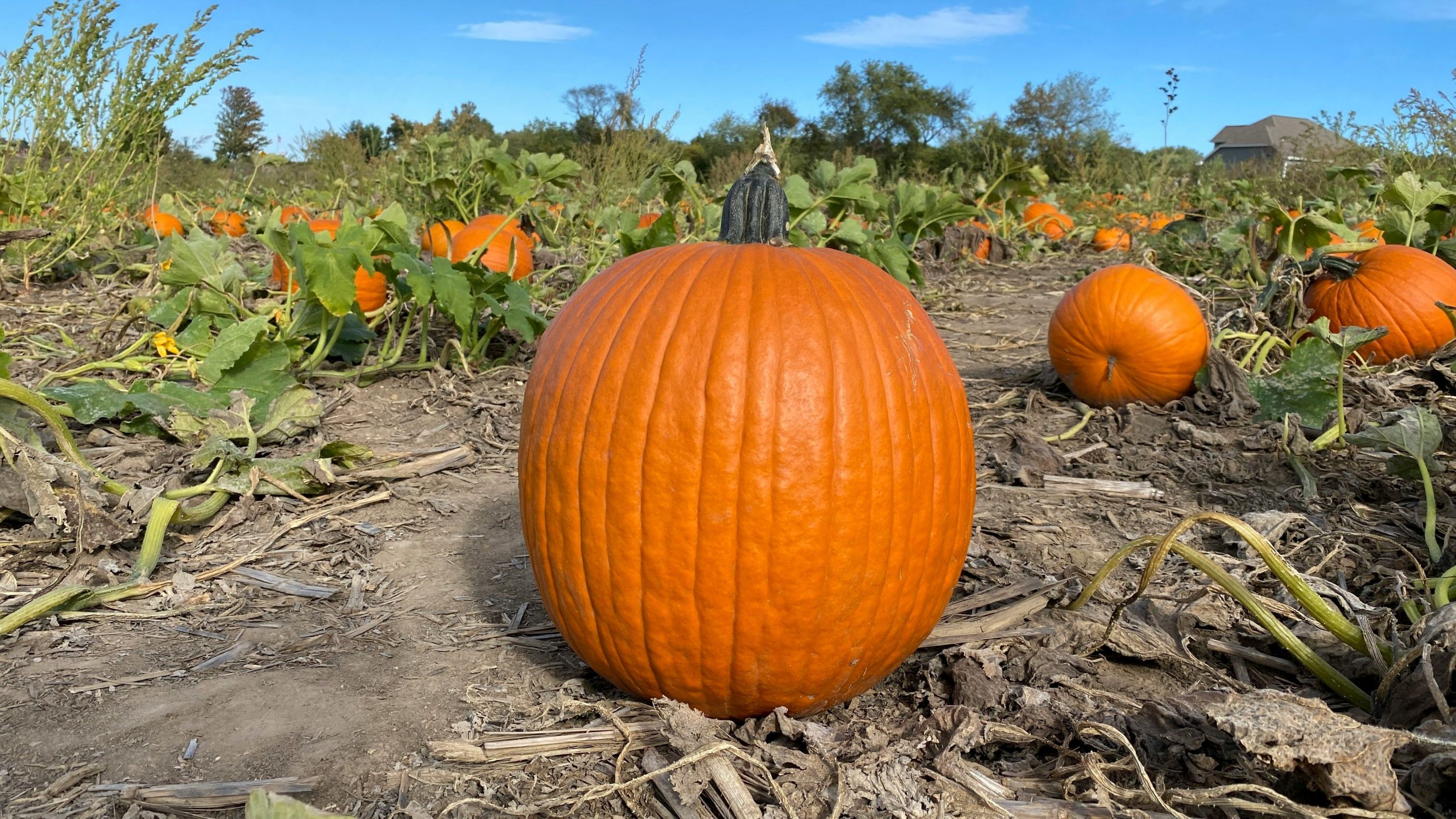
    If you’ve ever carved a pumpkin, you know what surprises most people isn’t how small the seeds are—it’s how many there are. A standard-sized pumpkin holds around 500 seeds. Five hundred seeds inside one pumpkin! Now imagine if 10% of those seeds were planted. That’s 50 new pumpkins from just one. And if each of those new pumpkins also produced about 500 seeds? That’s 25,000 seeds. Again plant just 10% of those seeds, and you’re suddenly looking at 2,500 pumpkins. WOW! Growth like that doesn’t happen overnight, but over time it multiplies in ways that are almost hard to comprehend.

    This God designed process of growing one pumpkin into many, many pumpkins, is an example of how compound interest works with money.

    This is what I like to call the Pumpkin Seed Principle.

    God built compound growth into creation

    From plants and trees to families and communities, God designed growth to happen gradually, faithfully, and abundantly. Scripture reminds us:

    “Let the earth sprout vegetation, plants yielding seed, and fruit trees bearing fruit in which is their seed.” — Genesis 1:11

    Notice the pattern: seed → growth → more seed.

    Money works the same way. Saving isn’t necessarily about having a lot right now—it’s about planting what you can and letting it grow.

    Why saving feels hard as a college student

    Let’s be real. When you’re in college, extra money can feel like a myth. Tuition, books, food, gas—it all adds up. Saving might feel pointless when you can only set aside $10 or $25 at a time.

    But that’s exactly where the Pumpkin Seed Principle matters most. You’re not planting a full-grown pumpkin. You’re planting a seed.

    Ecclesiastes 11:6 encourages us:

    “Sow your seed in the morning, and at evening let your hands not be idle.”

    Small, consistent action matters more than the size of the seed.

    How compound interest works (without the math headache)

    Compound interest simply means that your money earns interest, and then that interest earns interest too. Over time, growth starts to build on itself. At first, it feels slow—almost invisible. But eventually, momentum kicks in.

    Just like a pumpkin vine, the biggest growth happens later. The earlier you plant, the more time growth has to do its work.

    Saving $25 a month may not feel impressive today—but over years, those small deposits can turn into something strong and stable.

    How to live out the Pumpkin Seed Principle

    Here’s how to start applying this idea right now:

    • Start small. Save what you can, even if it’s just a few dollars.
    • Put your savings in an account that earns interest – preferably a high yield savings account.
    • Be consistent. Regular saving beats occasional big deposits.
    • Be patient. Growth takes time—both in gardens and bank accounts.
    • Protect your seed. Avoid pulling money out unless it’s truly necessary.

    A seed of peace

    Saving money is about stewardship and peace. Each small deposit is a reminder that you’re building something—slowly, faithfully, and with intention.

    So don’t despise small beginnings. God doesn’t. Plant your seed. Tend it well. And trust that, in time, growth will come—just like God designed the pumpkin seed to.

  • ✋🏼Wait! You’re not behind. You’re just in a different financial season.

    ✋🏼Wait! You’re not behind. You’re just in a different financial season.

    Over the holiday break I traveled to Scottsdale with my husband and our two kids. A couple of years ago, we started a little post-Christmas tradition: just the four of us escaping for a few days to rest, relax, and recover from the holiday chaos (and the emotional hangover that is December). It’s quickly become one of my favorite traditions.

    We’re also shamelessly soaking up every ounce of sunshine to mentally prepare ourselves for the rest of a very frigid Midwest winter. 🥶 If seasonal affective disorder had a mascot, it would be me by February.

    All this warm weather has me thinking about seasons. Not just the weather kind, but the seasons we go through in life and money.

    There are seasons of growth, abundance, prosperity, and harvest. And how do we feel about those seasons?

    Oh, we love them.

    Life feels lighter. Money stress is lower. Confidence is higher. We’re thriving. We’re glowing. We’re ordering the guac without checking the price. (Yum!)

    But here’s the thing: those seasons don’t just magically appear.

    They almost always come after a different kind of season first.

    A season of planting.
    A season of pruning.
    A season of building roots when it feels like nothing is happening above ground.

    And while those seasons are just as important as the harvest, let’s be honest about how we usually respond to them.

    We hate them.
    We avoid them.
    We complain.
    We sulk.
    We quit.
    We tell ourselves, “Maybe I’m just bad with money,” and call it a personality trait.

    If you’re currently in a planting, pruning, or root-building season financially, you’re not behind, you’re being prepared.

    And if you want to experience a future financial harvest, here are three things you can start doing right now.

    1. Open your Bible

    Seriously.

    The first step isn’t meeting with a financial advisor or aggressively paying off your credit card – it’s aligning your heart, mind, and money with God.

    I’ll say it this way: if everyone managed their money the way the Bible teaches, we’d have a lot fewer money problems.

    If you’re not sure where to start, Proverbs and Luke are two of my favorite books. Open your Bible and ask God to speak to you. Ask Him to show you exactly what you need to hear that day. (Spoiler: it’s usually not what we want to hear, but it’s always what we need.)

    2. Check your circle

    There are seasons when we cannot do life – or money – alone.

    Who are the wise, healthy, God-loving individuals in your life who encourage you, challenge you, and remind you of your potential when you forget it?

    If you don’t have those people yet, that’s okay! Reach out to a local church or your university and ask about small groups or Bible studies. Community isn’t optional – it’s essential.

    Your posse matters. Choose wisely.

    3. Activate your financial plan

    Notice I didn’t say “make a plan” or “make a budget.”

    Why?

    Because a plan that sits untouched is just a very optimistic piece of paper.

    Instead, activate your plan.

    Meet with someone you love and trust – someone who actually understands money – and ask them to help you create a realistic financial plan for the next 3–6 months. Then (as Nike says)…just do it.

    If you want to move out of your current financial season and toward a season of harvest, you have to start planning, planting, and yes – pulling some weeds.

    Sometimes you can’t control what season you’re in.

    But you can control how you respond to it – and what you do while you’re there.

    May this be the year you stop waiting for things to magically change and start taking intentional steps toward the life you’ve always dreamed of.

    Your harvest is coming. 🌱

css.php
Hosted by Concordia University, Nebraska | CUNE Portal