
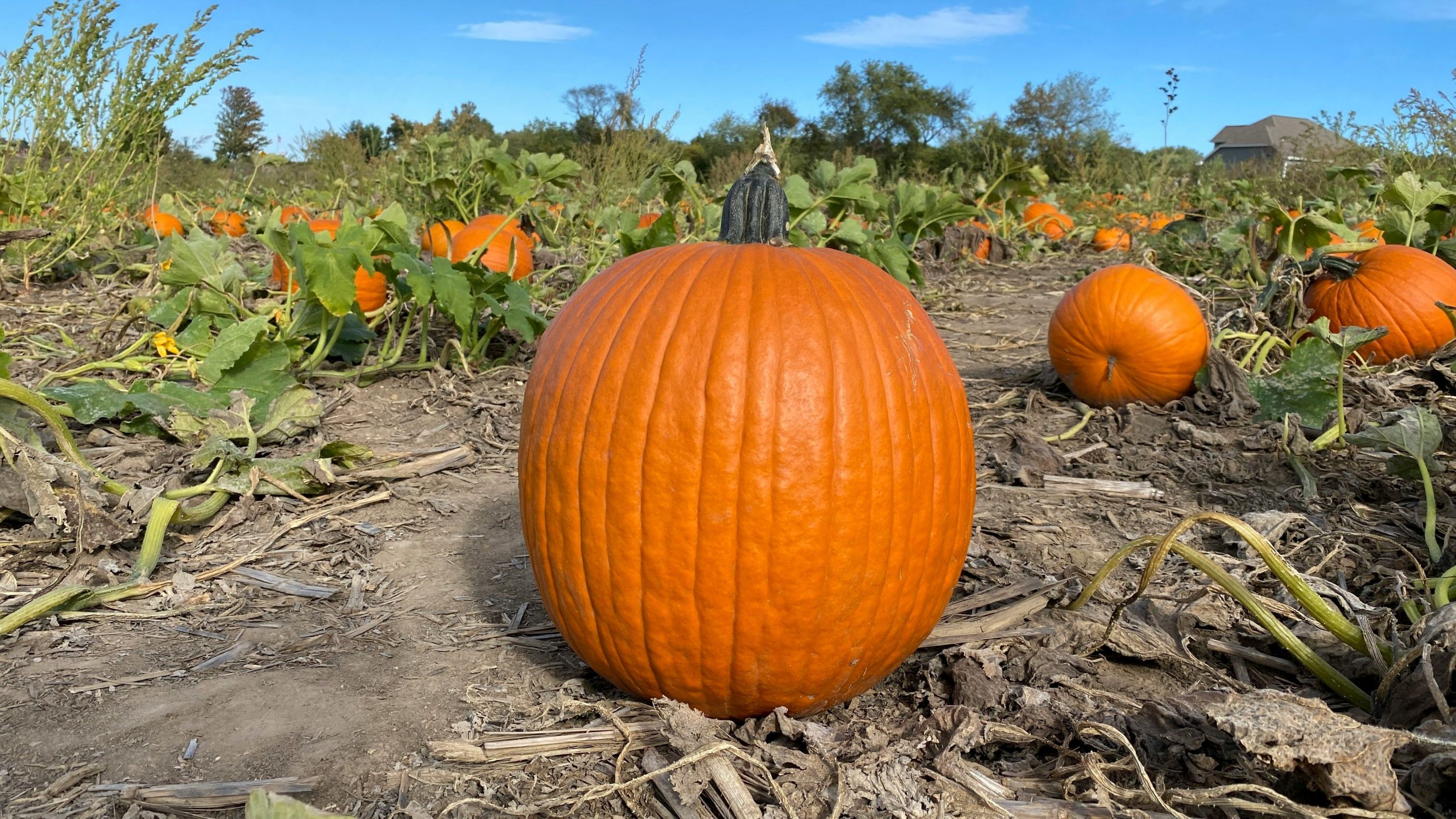
Did you know that God created processes in nature that can teach us how to manage our personal finances?
If you’ve ever carved a pumpkin, you know what surprises most people isn’t how small the seeds are—it’s how many there are. A standard-sized pumpkin holds around 500 seeds. Five hundred seeds inside one pumpkin! Now imagine if 10% of those seeds were planted. That’s 50 new pumpkins from just one. And if each of those new pumpkins also produced about 500 seeds? That’s 25,000 seeds. Again plant just 10% of those seeds, and you’re suddenly looking at 2,500 pumpkins. WOW! Growth like that doesn’t happen overnight, but over time it multiplies in ways that are almost hard to comprehend.
This God designed process of growing one pumpkin into many, many pumpkins, is an example of how compound interest works with money.
This is what I like to call the Pumpkin Seed Principle.
God built compound growth into creation
From plants and trees to families and communities, God designed growth to happen gradually, faithfully, and abundantly. Scripture reminds us:
“Let the earth sprout vegetation, plants yielding seed, and fruit trees bearing fruit in which is their seed.” — Genesis 1:11
Notice the pattern: seed → growth → more seed.
Money works the same way. Saving isn’t necessarily about having a lot right now—it’s about planting what you can and letting it grow.
Why saving feels hard as a college student
Let’s be real. When you’re in college, extra money can feel like a myth. Tuition, books, food, gas—it all adds up. Saving might feel pointless when you can only set aside $10 or $25 at a time.
But that’s exactly where the Pumpkin Seed Principle matters most. You’re not planting a full-grown pumpkin. You’re planting a seed.
Ecclesiastes 11:6 encourages us:
“Sow your seed in the morning, and at evening let your hands not be idle.”
Small, consistent action matters more than the size of the seed.
How compound interest works (without the math headache)
Compound interest simply means that your money earns interest, and then that interest earns interest too. Over time, growth starts to build on itself. At first, it feels slow—almost invisible. But eventually, momentum kicks in.
Just like a pumpkin vine, the biggest growth happens later. The earlier you plant, the more time growth has to do its work.
Saving $25 a month may not feel impressive today—but over years, those small deposits can turn into something strong and stable.
How to live out the Pumpkin Seed Principle
Here’s how to start applying this idea right now:
- Start small. Save what you can, even if it’s just a few dollars.
- Put your savings in an account that earns interest – preferably a high yield savings account.
- Be consistent. Regular saving beats occasional big deposits.
- Be patient. Growth takes time—both in gardens and bank accounts.
- Protect your seed. Avoid pulling money out unless it’s truly necessary.
A seed of peace
Saving money is about stewardship and peace. Each small deposit is a reminder that you’re building something—slowly, faithfully, and with intention.
So don’t despise small beginnings. God doesn’t. Plant your seed. Tend it well. And trust that, in time, growth will come—just like God designed the pumpkin seed to.


Leave a Reply